Body Fat Percentage: What a Tape Measure Can and Can't Tell You
How the U.S. Navy body fat formula works, how accurate it really is, and why it so often disagrees with the BMI-based estimate of body fat percentage.
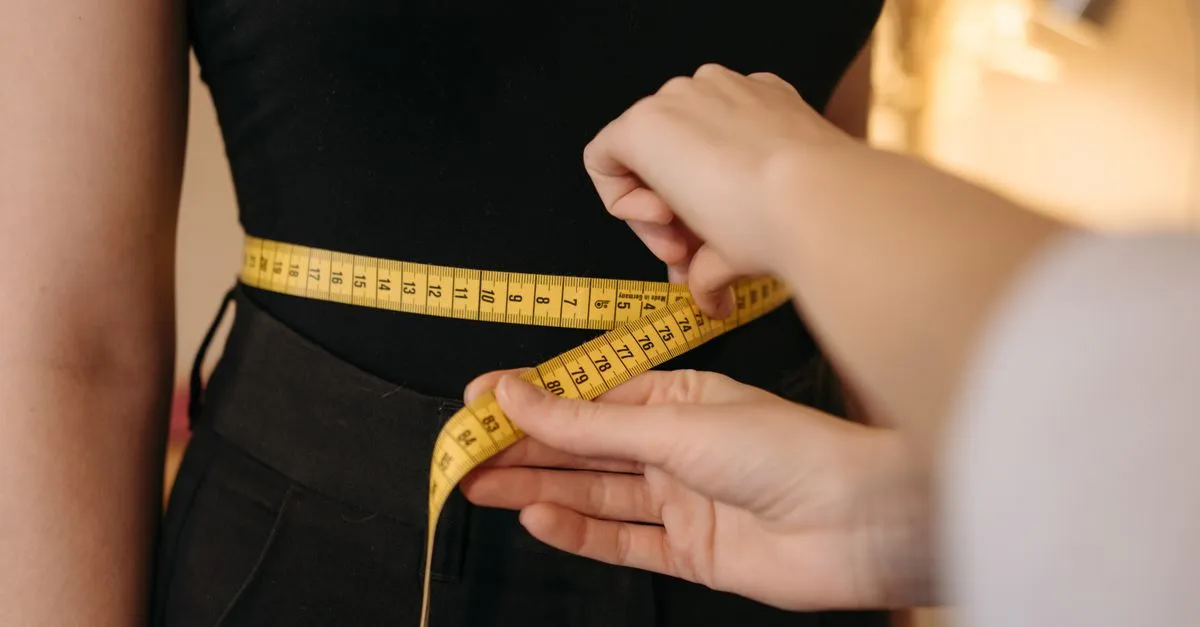
The U.S. Navy needed a way to check body composition on thousands of sailors without a lab. Hydrostatic tanks were out. So in 1984 two researchers at the Naval Health Research Center, James Hodgdon and Marcia Beckett, fitted a formula to tape measurements on a few hundred service members, and that formula is still in the Navy’s physical readiness instruction today. Four decades later it’s also what most “body fat calculator” pages on the internet are quietly running, including ours.
Why it asks about your neck
This is the part that confuses people. What does neck girth have to do with fat?
Almost nothing, and that’s the point. The neck barely stores fat, so its circumference tracks your frame and lean tissue. The waist, which stores plenty, tracks fat. The formula reads the gap between them and scales it by height. Subtract a bigger neck from the same waist and you get a lower result, which is exactly how it’s supposed to behave for someone who trains.
The practical consequence: your neck measurement is the one most worth getting right. Measure it with your chin tucked and you’ll shave a centimetre off, which adds two or three percentage points of “body fat” that don’t exist. Stand normally, look straight ahead, tape just below the larynx.
About that accuracy question
Validation studies put the standard error at roughly 3–4 percentage points against hydrostatic weighing. Read 20% and the honest statement is “probably between 16% and 24%.”
That sounds bad until you ask what you’re comparing it to. A DEXA scan costs money and an appointment. Bioimpedance scales swing by several points depending on how much water you drank. And the alternative most people actually use is squinting at themselves in a mirror.
Where the tape method earns its keep is consistency. The errors mostly repeat: if you always measure the same spots the same way, a drop from 24% to 21% over three months is real, even if both numbers are off by two points in the same direction. Absolute value, shaky. Trend, trustworthy.
Measure in the morning before eating. Write it down. Do it again in a month, not next Tuesday.
When the two estimates disagree
Our calculator also prints the Deurenberg estimate, which derives body fat from BMI, age and sex. It knows nothing about where your mass sits, so it treats muscle and fat as the same stuff.
Take a 35-year-old man, 180 cm and 85 kg, neck 39 cm, waist 94 cm. Tape method: 21.9%. BMI method: 23.3%. His BMI is 26.2, which on paper reads as overweight. The gap between the two numbers is the interesting bit, and the direction tells you something — above-average muscle pulls the BMI estimate up relative to the tape, a sedentary build pushes it down.
A point and a half of disagreement is normal. Six or seven points means one of your measurements is wrong, or your build is genuinely unusual for your BMI.
The number isn’t a grade
The American Council on Exercise calls 14–17% “fitness” for men and 21–24% for women, with the bands above that labelled average. Women run higher across the board because more of their fat is essential — it’s tied to reproductive function, and pushing it very low tends to stop the menstrual cycle.
I’d treat any of these thresholds as rough geography rather than a target to hit. A single reading tells you where you are. Three readings over three months tell you where you’re going, which is the only part you can act on.
Grab a tape and run the numbers — it works in the browser, and your measurements never leave the page.