How to Write Amounts in Words on Cheques and Contracts
The 56/100 convention, where the hyphens go, why US and British English disagree about 'and', and the rule banks use when words and digits conflict.
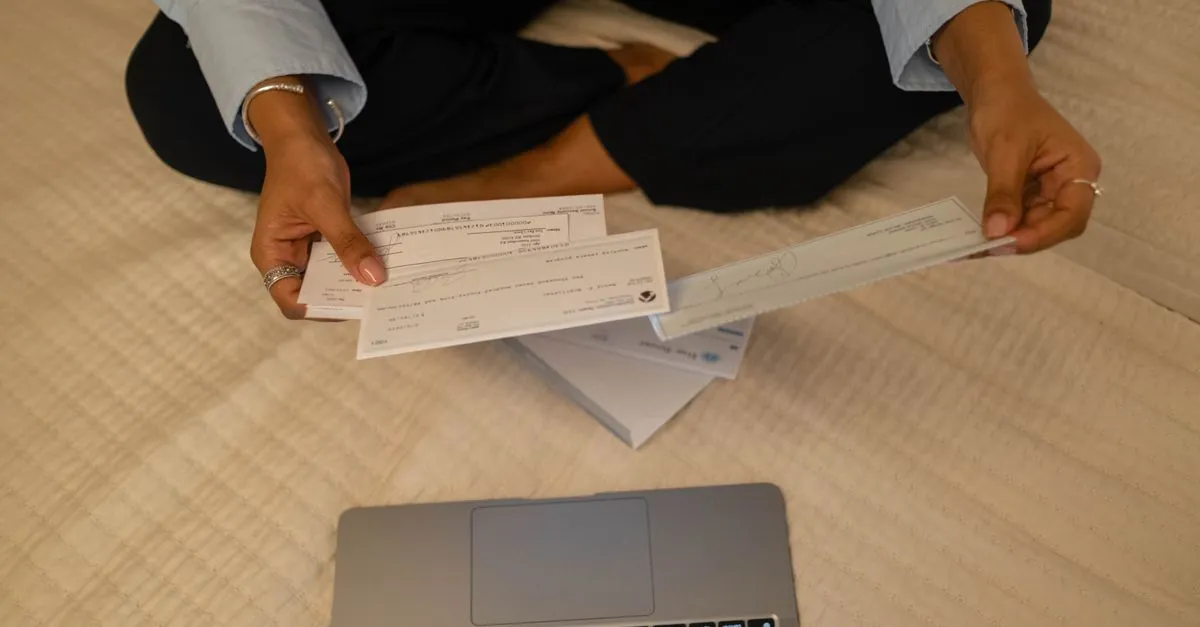
If the digits and the words on a cheque disagree, the bank doesn’t void it. It pays the words.
That’s not a quirk of one bank’s policy. UCC §3-114 spells it out: when an instrument contains contradictory terms, words prevail over numbers. Write $1,500.00 in the box and “one hundred fifty and 00/100” on the line, and you have written a cheque for one hundred fifty dollars. Getting that line right is the whole reason the Number to Words Converter exists.
Why cheques use the 56/100 form
Cents don’t get spelled out. The convention is to write the dollars in words and the cents as a fraction over one hundred: One thousand two hundred thirty-four and 56/100. Some templates add the currency, giving One thousand two hundred thirty-four dollars and 56/100. Both clear.
Two digits over 100 are hard to tamper with. Spelled-out cents leave more room for creative editing, which is also why you draw a line through the empty space after the amount.
Hyphens go in exactly one place
Chicago and AP agree here: hyphenate the compound numbers from twenty-one through ninety-nine, and nowhere else.
- forty-two
- one hundred forty-two
- three thousand four hundred sixty-five
- two hundred (no hyphen, nothing compound about it)
People often add a hyphen after hundred or thousand. It isn’t wrong enough to bounce a cheque, but it looks off to anyone who processes documents for a living.
The “and” that splits US and British English
101 reads one hundred one in American English and one hundred and one in British English. Neither is a mistake in its own market. American style also reserves and for the decimal point in speech, which is why “two hundred and fifty” sounds ambiguous to a US ear and perfectly ordinary to a British one.
Our converter follows US style. If you need the British form for a UK contract, add the word yourself after hundred; nothing else about the wording changes.
Where spelled-out amounts are actually required
Cheques are the obvious case, but they’re no longer the common one. These show up more often:
- Contracts with a payment clause, where the figure is repeated in words inside parentheses
- Invoices in Russia, Ukraine, India, and most of the Gulf states, where the amount in words is a mandatory field
- Promissory notes and loan agreements
- Court filings and notarised documents
Russian invoicing has an extra wrinkle. Сумма прописью has to agree in gender and case, so 1,000 rubles is «одна тысяча рублей» with a feminine одна, while 2 hryvnia is «две гривны». The tool handles that agreement on the Russian version of the page, which saves a surprising amount of second-guessing.
Rounding, and one thing to watch
The cheque and currency lines round to two decimals, so 3.999 comes out as four dollars and 00/100. That’s what you want for money. The plain “In words” line does the opposite: it reads every digit you typed, one at a time, so 3.999 becomes three point nine nine nine. Use the first for documents and the second when you’re reading a measurement aloud.
One habit worth keeping: after you copy the words, glance back at the digits. The converter can only spell out the number you gave it, and a typo in the box is still a typo.
Paste any amount into the Number to Words Converter, pick your currency, and copy the line you need.